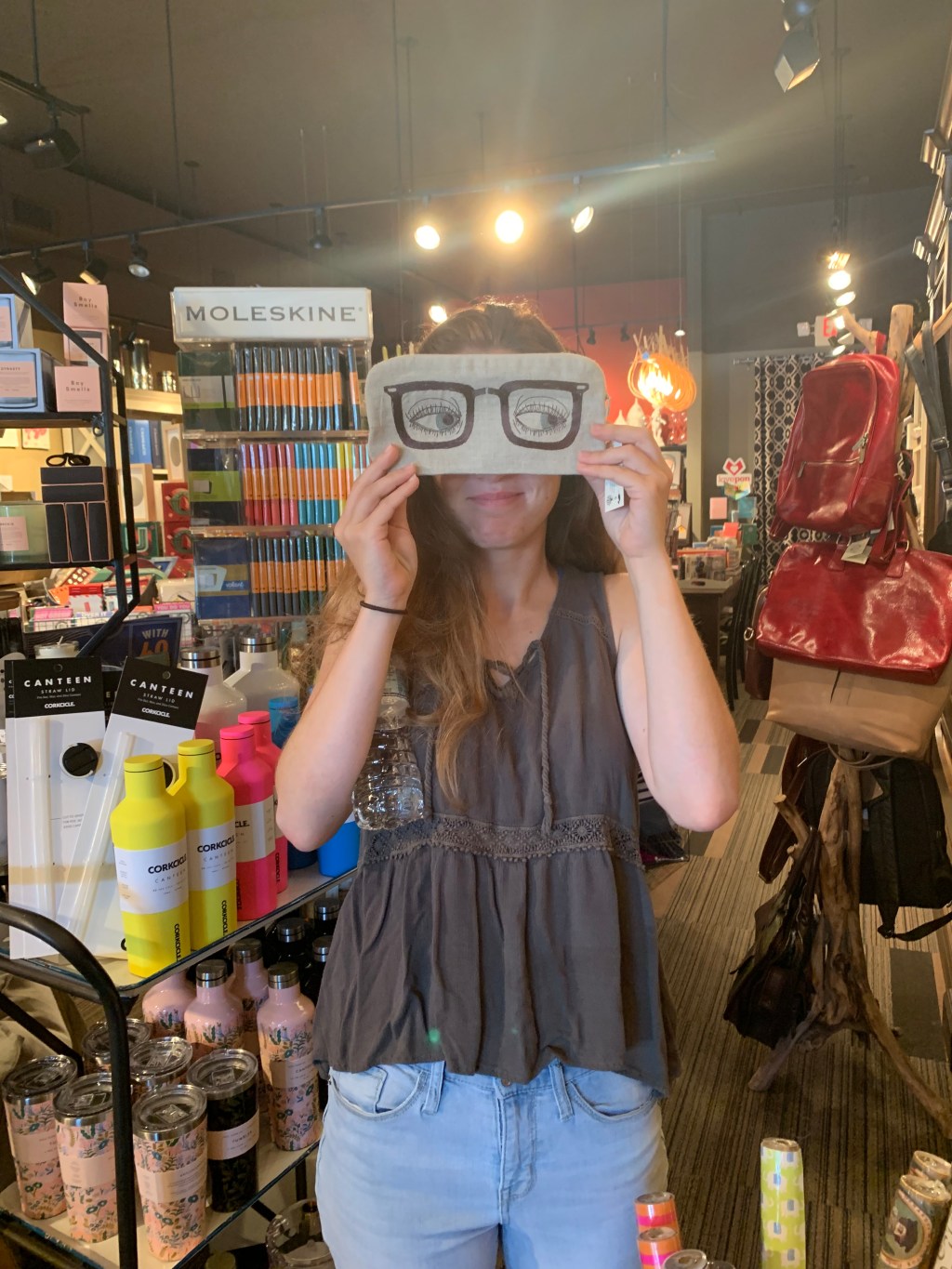
I was in middle school when I found out I needed glasses for myopia. The discovery came when I needed to get an annual physical to try out for the track team, and I failed to read even the “E” at the top of the Snellen chart (the chart with the pyramid of letters that decrease in size from top to bottom). I needed glasses. Badly. I could hardly see anything more than an arm’s length away from my face. To the doctor’s dismay, I had gone many years without corrective lenses and instead would squint my eyes to eliminate scattered, unfocused light to see distant objects. I remember sitting in my 7th grade science class, in the front row, struggling to see the words written on the white board (hey, but that didn’t stop me from taking a keen interest in the subject)!
My body adjusted to the continuous state of poor vision. Even now, I don’t need corrective lenses unless (1) I’m driving somewhere or (2) I’m reading something far away. Being able to see the smallest detail is not critical to my survival with the caveat of navigating a vehicle through D.C. traffic, which is already difficult even with 20/20 vision. However, I can imagine a time when myopia could’ve easily depleted the genetic pool of people like me. Maybe thousands of years ago we needed to see an encroaching lion or spot a distant water hole in a desert after traveling hundreds of miles in unrelenting heat. But in today’s world, I can actively seek cuddles from tiny, lion-like creatures in my air-conditioned home while drinking Sanpellegrino; no glasses needed.
One observation I’ve made is that without glasses I’m a lot more extroverted. Perhaps my body adjusted to the fuzzy, early years of life such that the enhanced resolution brings about an unusual awareness of my surroundings. In the three seconds that it takes to put my glasses on, my brain goes from receiving a low input from the surrounding environment to an overwhelming amount of input. All the sudden I can see details like the jagged edges of leaves or the brown speckles of textured carpet (a core memory from the first time I wore prescription glasses in my parents’ home). While the effect of rapidly enhanced vision is not terribly bad in brightly lit, outdoor settings, I’ve found that I often get nauseous while shopping in big retail stores because of all the competing colors vying for my attention in poorly lit spaces.
So, what is the fuzzy vision paradox? While having poor vision is clearly disadvantageous in most cases, I’ve found that when it comes to social situations, the inability to clearly see others’ expressions and reactions to my words reduces my inhibitions around them. This benefit, however, works only when I’m in a familiar environment around people I know and trust. If I was–for whatever reason–ushered onto a stage at a stand-up comedy show, I’d be terrified of the possibility of tripping over a wire and making a fool out of myself in front of a large audience (but whatever gets a laugh, am I right?). In unfamiliar environments, there are too many unknown variables that mask the positive effects of social blindness. Nevertheless, the observation that social blindness can enhance confidence in specific situations is paradoxical as often external feedback is a necessary part of adjusting our behavior accordingly.
So, why would fuzzy vision make us more confident in conversation? Perhaps our hearing abilities become heightened to compensate. Or perhaps the inability to clearly see our friends’ faces reduces feelings of judgment. For myself, I find that when I have maximal visual acuity, I experience something similar to the spotlight effect: since I’m more aware of my surroundings, I think that they must be more aware of me. When my surroundings are blurry, it’s almost like a forced detachment from this effect. I feel more blended in with the background and, as a result, less pressure to perform and more incentive to act natural. For me, being without glasses feels like I’m flying low which, paradoxically, allows me to fly high.
 A blog about everything
Leave a comment